
We believe brand interaction is key in commu- nication. Real inno vations and a positive customer experience are the heart of successful commu- nication.
Contact Us
- Chandni Chowk
- maahiyakshit@gmail.com
- +919811130135
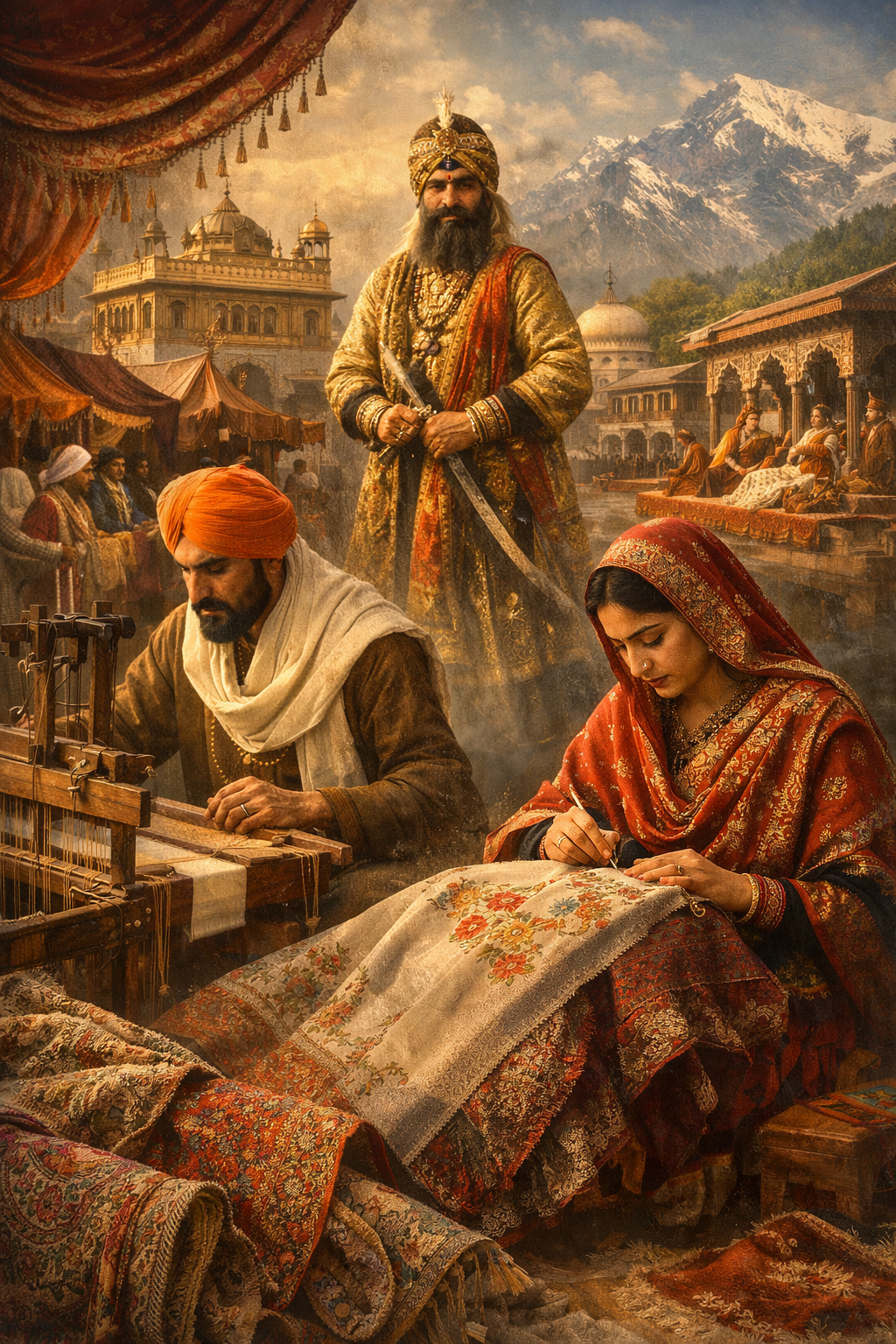
There is something almost poetic about shawls — how a single thread of craftsmanship can connect two powerful cultural worlds: Punjab and Kashmir. For centuries, shawls have carried more than warmth; they have carried heritage, art, identity, and status.
From the bustling textile lanes of Punjab to the serene valleys of Kashmir, shawl-making has remained one of India’s most celebrated traditions — a legacy that still lives today through craftsmanship-driven brands like Gulmera, which are ensuring these arts thrive in the modern era.
The shawl industry in North India has roots stretching back hundreds of years. In Punjab, particularly, shawl production and trade grew massively during the reign of Maharaja Ranjit Singh, when Kashmir’s artistic excellence found strong demand in the royal courts and elite households of Punjab.
Historians often mention how Kashmiri shawls became not just garments but symbols of power and prestige. Antique shawls and textile archives even hold depictions from the mid-19th century — showing how deeply shawls were embedded into the identity of the era.
The Kashmiri shawl was never simply “fancy cloth.” It was a moving canvas of art — crafted with unmatched patience and detail.
As political powers shifted and trade routes expanded, Kashmir’s weaving artistry naturally flowed into Punjab’s textile hubs. Kashmir held the unmatched skill of weaving and embroidery, while Punjab played a key role in trade, finishing, and market expansion.
This union created a cultural nexus where:
Kashmir gave the shawl its soul (luxury weaving and embroidery)
Punjab gave the shawl its reach (trade, refinement, accessibility)
Together, they shaped an ecosystem that supported artisans and kept the shawl tradition alive across generations.
The love of shawls in royal life is legendary. Under Maharaja Ranjit Singh’s patronage, shawls became a staple of court luxury. Courtiers were often dressed in the finest shawls, and gifting Kashmiri shawls became one of the highest forms of respect.
One famous foreign visitor described the royal environment in striking detail, saying the entire surrounding felt wrapped in shawls — from tents to seating areas — almost like shawls had replaced ordinary fabric in daily life.
Such descriptions reflect how shawls were treated not just as clothing, but as royal art.
Today, the same cultural bond between Punjab and Kashmir continues through artisan-led craftsmanship — and Gulmera plays an active role in preserving this heritage.
Where shawl-making was once dependent on seasonal trade, Gulmera has helped modernize the ecosystem by providing artisans with:
By bridging traditional artistry with modern markets, Gulmera ensures artisans are not limited by geography — their work now reaches customers who truly value handmade luxury.
Shawls remain one of India’s most powerful cultural identities because they carry:
Through Gulmera, shawl craftsmanship is not treated as a dying tradition — but as a living heritage, meant to flourish and grow.
